Linking Secure Transfers to Game Selection Patterns Among Mobile Users

Mobile users demonstrate clear preferences for games that integrate secure transfer options, and researchers tracking these behaviors note consistent correlations between payment security features and selection trends across platforms. Data from industry analyses show that games supporting encrypted wallet integrations and biometric verification attract higher engagement rates, particularly when users prioritize rapid yet protected fund movements during play sessions. This pattern emerges because secure transfers minimize interruptions while aligning with user expectations for data protection in real-time environments.
Secure Transfer Mechanisms and Their Reach
Payment systems employing end-to-end encryption and multi-factor authentication appear in a growing share of mobile gaming applications, and figures from regulatory filings indicate adoption rates climbed steadily through mid-2026. Users gravitate toward titles that embed these tools directly into the interface rather than routing through external processors, which reduces steps and maintains session continuity. Observers tracking app stores report that games highlighting instant bank transfers or token-based methods see elevated download volumes compared to those relying on legacy card processing alone.
Game Selection Trends Tied to Payment Security
Patterns reveal that mobile players frequently choose slot-style experiences or live interaction formats when secure transfer pathways support low-latency confirmations, whereas slower verification processes correlate with shifts toward simpler, lower-stakes options. Studies compiled by regional gaming associations document how users in urban markets adjust selections within the same session if a preferred game lacks compatible secure channels, often migrating to alternatives that process deposits through verified digital ledgers. This behavior holds across age groups, though younger cohorts exhibit stronger responsiveness to apps that combine biometric logins with instant payout previews.
Data Patterns Emerging in July 2026
Reports released in July 2026 from cross-border gaming oversight bodies highlight measurable upticks in selections of games featuring tokenized transfers, with retention metrics improving by double-digit margins in markets where such options expanded. These datasets link higher completion rates for in-game purchases to the presence of fraud-detection layers that operate without user intervention, allowing seamless progression from deposit to active play. Analysts examining platform logs note that games without these layers experience quicker drop-off when users encounter repeated authentication prompts, prompting developers to prioritize compatibility updates.
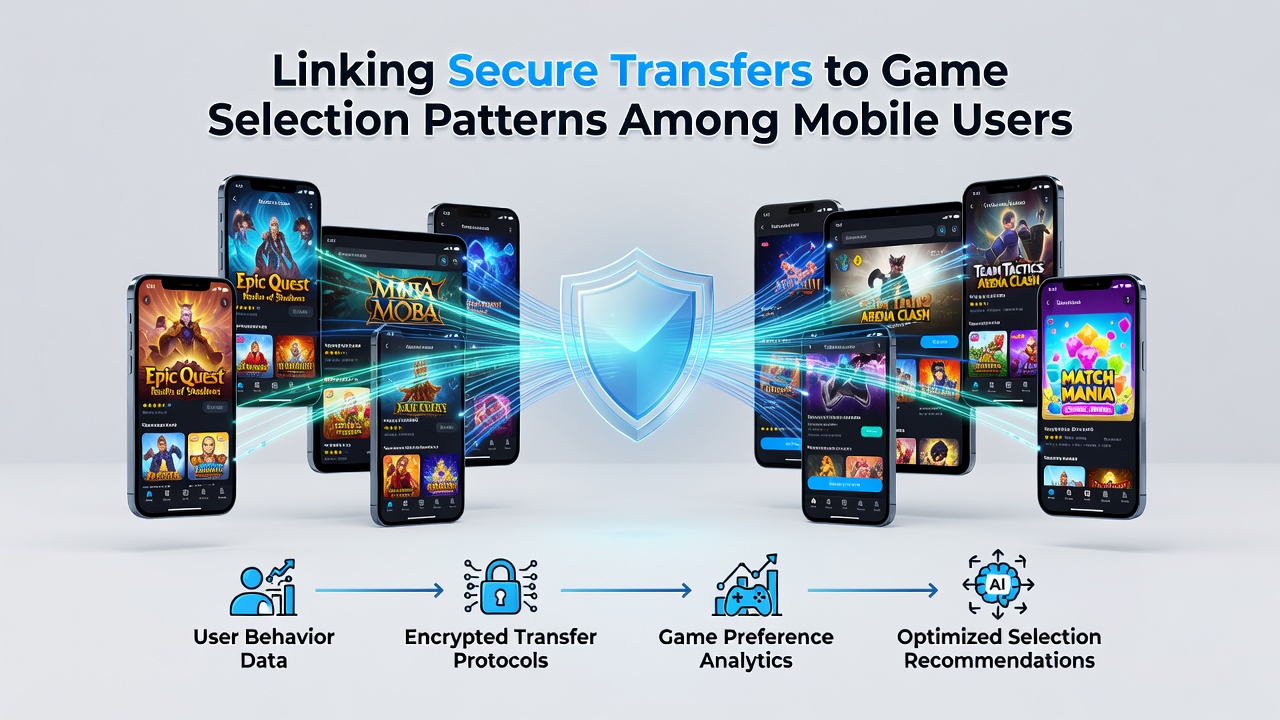
Regional variations surface clearly in the data, as North American users demonstrate stronger ties between secure e-wallet integration and selection of progressive jackpot formats, while European cohorts favor live dealer environments when transfers include real-time compliance checks. According to findings shared by the American Gaming Association, these preferences stabilize once users establish trusted payment profiles, reducing the frequency of game switching within individual accounts.
Influences on Broader User Behavior
Additional factors compound the connection, including regulatory requirements that mandate specific security standards before certain game categories receive approval for mobile distribution. Platforms incorporating these standards early report sustained user bases, and case examples from Canadian provincial regulators illustrate how standardized secure transfer protocols coincide with steadier selection patterns across reel-based and interactive titles. Users who encounter consistent security cues tend to explore broader game libraries rather than remaining with familiar choices, expanding engagement metrics over time.
Industry organizations such as the European Gaming and Betting Association track these dynamics through anonymized transaction data, revealing that games with embedded secure options maintain higher average session durations even when competing against titles with promotional incentives. This stability arises because trust in the transfer process allows users to focus on gameplay mechanics instead of payment friction points.
Conclusion
Connections between secure transfers and game selection continue to shape mobile user patterns, with ongoing data collection providing clearer mappings of these relationships. Platforms adapting to verified payment preferences position themselves to align with observed behaviors, while regulatory updates maintain baseline protections across regions. The evidence points to payment security functioning as a foundational element that influences not only initial choices but also sustained interaction across diverse mobile gaming formats.