How Thematic Narratives Guide Exploration in Story-Driven Slot Adventures
 Story-driven slot adventures integrate narrative layers that direct player movement through virtual worlds, and these structures rely on thematic consistency to shape how participants advance from one stage to the next. Game developers embed plot points, character arcs, and environmental details directly into reel mechanics, bonus triggers, and level unlocks, which creates pathways that feel purposeful rather than random. Research from gaming design programs at institutions such as the University of Nevada, Las Vegas indicates that such integration increases session duration when players recognize clear connections between visual themes and mechanical rewards. Themes function as navigational tools in these titles by establishing rules for progression that mirror traditional storytelling beats, and developers use recurring symbols like ancient maps, hidden keys, or evolving landscapes to signal upcoming challenges. Players encounter these cues during base gameplay, where matching specific icon combinations advances a central quest line while simultaneously awarding credits. This dual purpose keeps attention focused on both financial outcomes and narrative milestones without requiring external guides or tutorials beyond the initial setup.
Core Mechanics That Tie Narrative to Movement
Exploration unfolds through layered features that activate in sequence, and each activation builds on the established theme to reveal new territories or story branches. For instance, a mythology-themed adventure might require collection of deity symbols across multiple spins before unlocking a temple chamber where additional reels or pick-and-click sequences appear. Those sequences often contain sub-narratives that expand the main plot, such as alliances formed with secondary characters or obstacles overcome through strategic choices presented within the bonus round itself.
Data collected across multiple operator platforms shows that games employing progressive narrative maps retain higher percentages of returning users compared with titles that feature static backgrounds. Observers note the difference arises because players can track their position within an overarching story, which provides measurable goals beyond simple credit accumulation. Industry reports compiled by the American Gaming Association highlight similar patterns in engagement metrics when thematic continuity spans base game, free spins, and jackpot phases.
Examples of Thematic Guidance Across Genres
Adventure frameworks set in lost civilizations frequently employ excavation motifs where each successful spin uncovers portions of a dig site, adn the uncovered sections correspond to new reel modifiers or multiplier ladders. Fantasy settings instead utilize portal mechanics that transport players between realms, with each realm introducing distinct symbol sets and volatility levels tied to the story's rising action. Science-fiction variants present navigation through star systems, where warp jumps triggered by scatter symbols advance both the plot and the player's access to higher-tier bonus content.
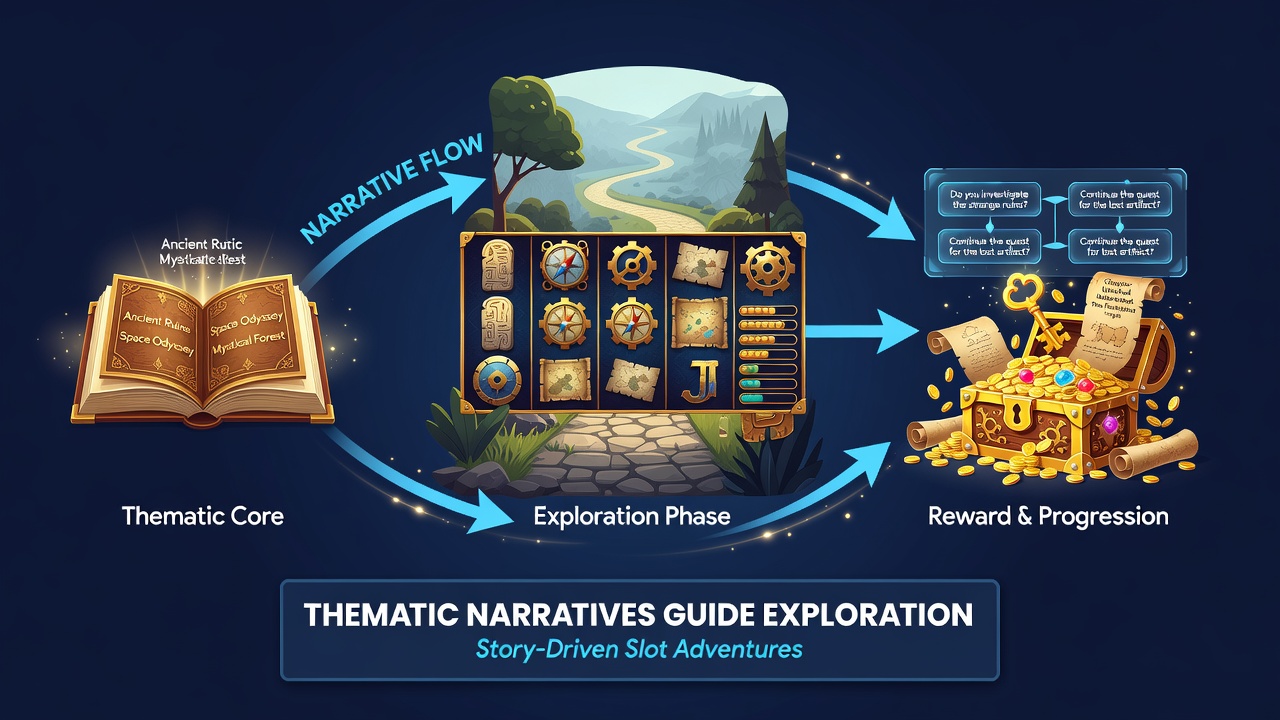
One case examined by researchers at a Canadian university gaming laboratory demonstrated that participants who followed visual story cues completed more bonus rounds per session than those who ignored them. The study linked this outcome to the way thematic elements reduce cognitive load by making reward structures predictable within the narrative logic. Similar findings appear in reports issued by the Australian Gambling Research Centre, which tracked mobile users interacting with story-based titles over extended periods in mid-2026.
Player Pathways and Decision Points
Modern implementations introduce branching choices that alter the direction of exploration based on selections made during interactive segments, and these branches maintain thematic coherence so that every route feels like a valid continuation of the central tale. Players might decide whether to pursue a treasure route or a combat route, each carrying different risk-reward profiles yet remaining consistent with the established world rules. Such design allows repeated playthroughs to yield fresh narrative experiences while preserving core mechanical familiarity.
Figures released in quarterly operator summaries reveal that titles with multiple narrative paths generate elevated interaction rates during peak hours, particularly when updates introduce new chapters aligned with seasonal events. Developers coordinate these additions with existing lore to avoid disrupting established player progress, which preserves momentum across updates.
Conclusion
Thematic narratives continue to serve as primary drivers for exploration in story-driven slot adventures by embedding directional cues within familiar reel formats. As platforms evolve through 2026, developers maintain focus on aligning visual storytelling with mechanical triggers to sustain player interest across extended sessions. This approach relies on consistent application of theme-specific rules that guide advancement without external instruction, and industry data supports the continued refinement of these systems across global markets.