How Certification Bodies Shape Accessibility Features Across Hybrid Gaming Formats on Wireless Devices
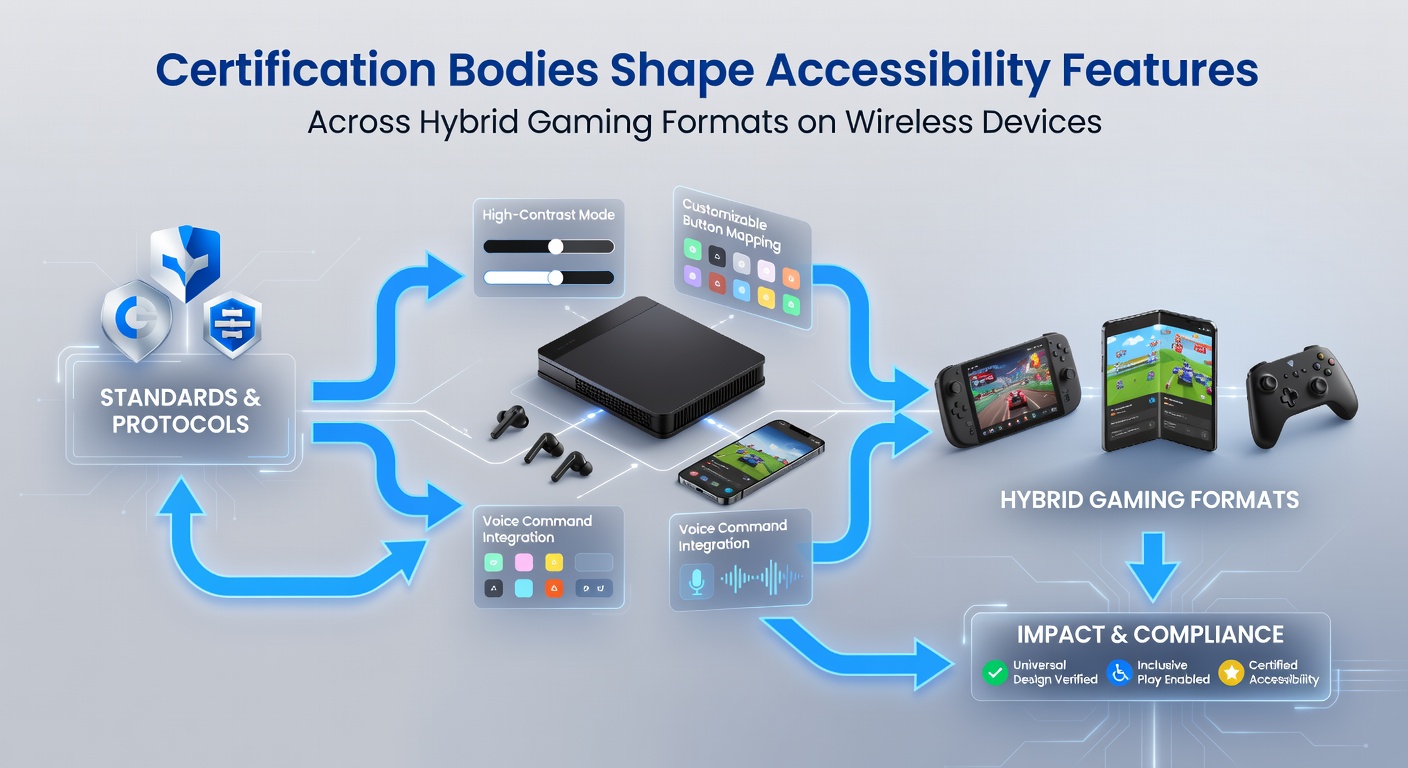
Certification bodies establish frameworks that influence how developers integrate accessibility into hybrid gaming formats running on wireless devices such as smartphones and tablets, and these standards affect features ranging from input customization to visual and auditory adjustments. Hybrid formats combine local device processing with cloud-based elements, creating scenarios where accessibility must function consistently across varying network conditions and hardware capabilities.
Key Certification Bodies and Their Roles
Organizations including the World Wide Web Consortium develop guidelines that extend to interactive entertainment, while regional entities enforce compliance through testing protocols tailored to portable platforms. The US Access Board contributes standards that address electronic interfaces, and these requirements filter into game development cycles when studios seek certification for broader distribution. In June 2026, updates from international panels highlighted expanded criteria for dynamic content adaptation, prompting studios to revise hybrid title architectures.
Researchers at academic institutions have documented how certification processes encourage the inclusion of scalable text, alternative control schemes, and subtitle synchronization that operate seamlessly whether gameplay occurs on-device or streams from remote servers. Data from industry reports indicate that titles passing multiple certification reviews demonstrate higher compatibility rates across wireless operating systems.
Impact on Hybrid Gaming Features
Hybrid gaming formats require accessibility elements that transition smoothly between offline sessions and online components, and certification bodies verify these transitions through structured audits. Features such as voice navigation, color contrast adjustments, and haptic feedback customization receive particular attention because wireless devices present unique constraints including battery life and touch-screen variability. Observers note that certification often mandates documentation of how these options perform under fluctuating signal strength.
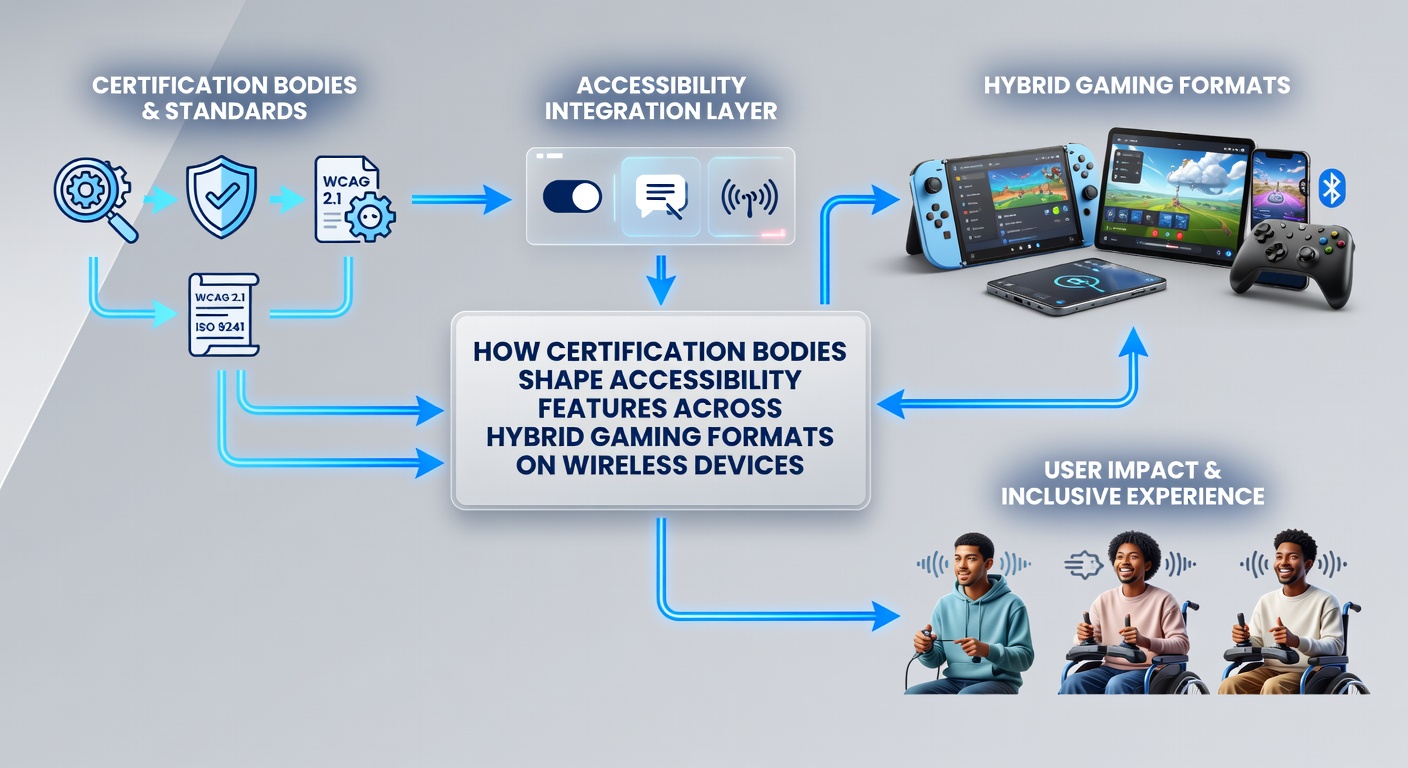
Studies conducted across North American and European development teams reveal patterns where certified titles incorporate modular accessibility layers that developers activate based on user profiles. One case involved a studio that adjusted its hybrid multiplayer system after certification feedback required persistent screen-reader support during cloud handoffs. Figures from regulatory summaries show increased adoption of such layers following guideline revisions in 2025.
Regional Variations in Certification Approaches
Approaches differ by jurisdiction, with Canadian accessibility regulations emphasizing inclusive design testing for portable applications, whereas Australian frameworks focus on measurable outcomes in real-world device usage. These variations lead developers to maintain parallel compliance tracks when releasing hybrid titles globally. Evidence from cross-regional comparisons indicates that unified certification pathways reduce duplication while preserving local priorities.
Industry associations compile databases of certified features, allowing teams to reference successful implementations from prior projects. Certification timelines typically span several months, during which iterative testing refines elements like gesture alternatives and audio cue timing to meet wireless-specific benchmarks.
Technical Integration and Testing Protocols
Testing protocols require simulation of network interruptions to confirm that accessibility tools remain functional, and certification bodies supply detailed checklists covering input remapping, visual scaling, and notification systems. Developers integrate these checks early in production because late-stage modifications prove costly for hybrid architectures that blend local rendering with remote assets. Reports from technical working groups demonstrate that early alignment with certification criteria correlates with fewer post-launch accessibility patches.
Wireless device ecosystems introduce variables such as operating system updates and hardware diversity, which certification processes address through version-specific validation. Teams document how features behave across device classes, creating records that support future audits.
Conclusion
Certification bodies continue to define parameters for accessibility within hybrid gaming on wireless devices through structured evaluation and iterative guideline refinement, and their influence appears in the consistent availability of adaptive tools across formats. Ongoing collaboration between regulators, researchers, and developers sustains these advancements as device capabilities evolve.