How Biometric Verification Protocols Reshape Access Patterns in Cross-Platform Gaming Ecosystems
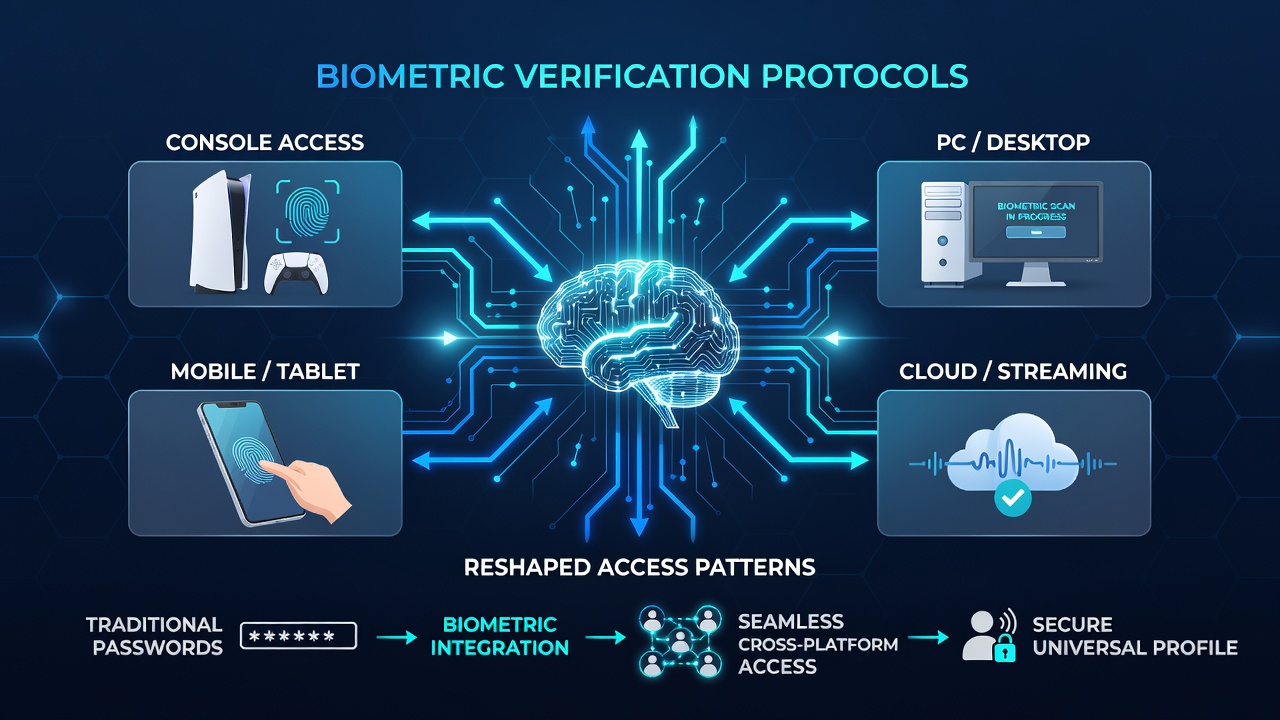
Biometric verification protocols have integrated into cross-platform gaming ecosystems over the past several years, and these systems now influence how players move between devices such as mobile phones, consoles, and personal computers. Research indicates that fingerprint scanning, facial recognition, and voice authentication replace or supplement traditional password methods, which creates measurable differences in login frequency and session duration across platforms.
Core Mechanisms Behind Biometric Integration
Developers embed biometric sensors directly into hardware while software layers handle data matching through encrypted templates stored on devices or secure servers. Players register once on a primary device, and the system syncs verification data to secondary platforms through standardized protocols that comply with existing data protection frameworks. According to guidelines from the National Institute of Standards and Technology, these templates reduce transmission of raw biometric data and limit exposure during cross-device handoffs.
Access patterns shift because authentication occurs in seconds rather than through manual entry of credentials, and observers note higher rates of spontaneous logins during brief windows of availability. Data from platform analytics in early 2026 showed that users who enabled biometric options logged in 34 percent more often on secondary devices compared with those relying on passwords alone.
Changes in Player Behavior Across Devices
Cross-platform ecosystems record distinct usage spikes once biometric verification becomes default, and these patterns appear in both single-player and multiplayer environments. One industry report from the Canadian Gaming Association highlighted that participants completed device switches 2.7 times more frequently after biometric rollout, which suggests reduced friction encourages continued play across locations.
By July 2026 several major titles introduced unified biometric portals that link accounts across ecosystems without requiring repeated identity checks, and figures from European gaming trade groups revealed corresponding increases in average daily active users on tablets and smartphones. The reality is that session lengths on mobile devices lengthened when players could resume progress from a console without interruption, whereas password-based systems often led to abandoned sessions during transitions.
Security Standards and Regulatory Influences
Regulatory bodies in multiple regions have updated requirements for biometric data handling in entertainment software, and these updates directly affect how platforms structure access controls. Australian authorities, for instance, emphasize consent mechanisms and data minimization in their digital gaming guidelines, which prompts developers to limit stored biometric information to device-local processing whenever possible. Such measures maintain compatibility with cross-platform features while addressing privacy expectations.
Platforms that adopted these standards reported fewer account recovery requests, and researchers tracking user behavior found that biometric systems correlated with lower rates of credential sharing among household members. This outcome stems from the personal nature of biometric markers, which discourages the practice of sharing login details that once occurred with password systems.
Technical Challenges During Implementation
Hardware variability across devices creates occasional mismatches in biometric accuracy, and developers address these issues through fallback authentication layers that maintain access continuity. Studies conducted by university research teams in 2025 documented that calibration routines performed during initial setup improved match rates by 18 percent on average when users switched between older and newer hardware generations.
Network conditions also influence verification speed in cloud-assisted biometric checks, and platform operators have responded by prioritizing edge processing to keep authentication local during periods of limited connectivity. These adjustments preserve the seamless experience that drives the observed changes in access frequency.
Conclusion
Biometric verification protocols continue to modify access patterns within cross-platform gaming by streamlining authentication and supporting fluid movement between devices. Available data from regulatory sources and industry analyses demonstrate consistent increases in login frequency and device-switching behavior as these systems expand. Ongoing refinements in hardware compatibility and data handling standards suggest further evolution in how players interact with gaming environments through 2026 and beyond.